PawOS
The AI companion that gets work done.
The work is fragmented. The system shouldn't be.
PawOS brings the work around your computer together. It acts as an execution layer between you and your tasks—bridging your files, projects, code, terminal, Git, and connected services into one cohesive environment.
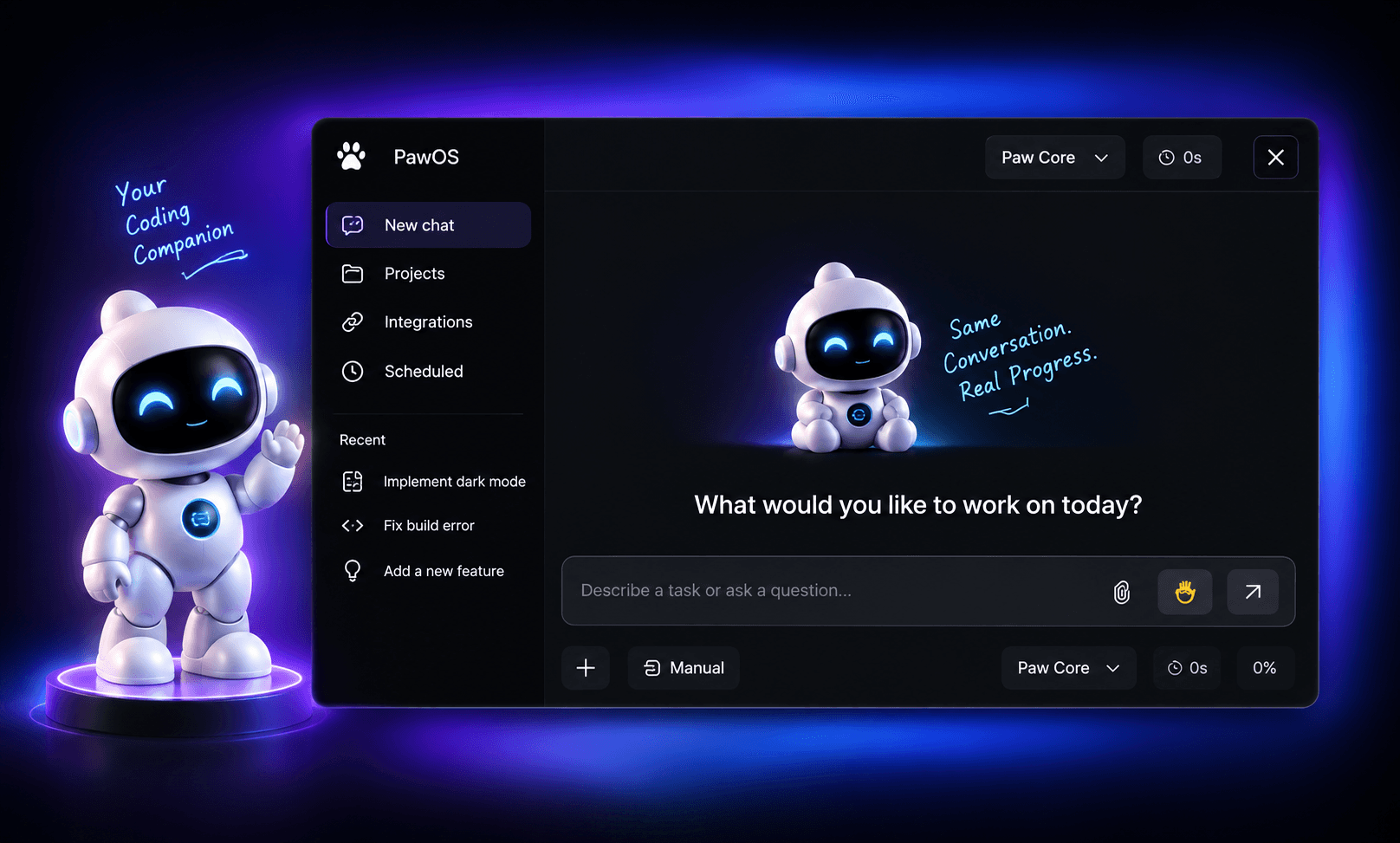
Start with what you need.
PawOS sits on your desktop, ready to understand what you want to accomplish. Rather than forcing you to translate your goals into ten different tools, you tell PawOS what you're working on. It gathers the surrounding context and prepares to act.
The best way to build with agents
Built to drive real engineering work
PawOS inspects your project, understands your request, and safely modifies your source code. From routine pull requests to your hardest problems, it reliably completes tasks end-to-end, applying the exact changes where they belong and reporting back what it achieved.
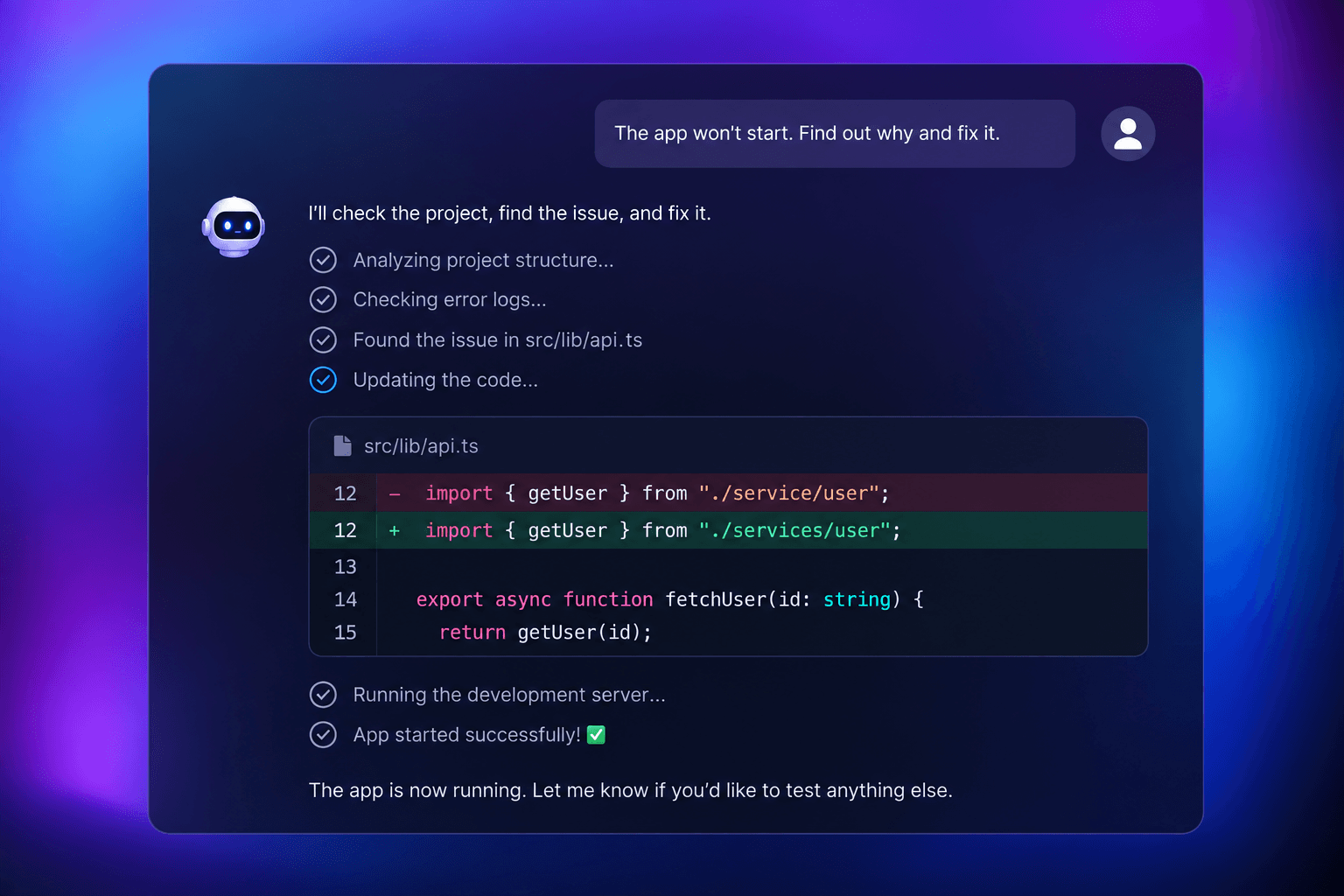
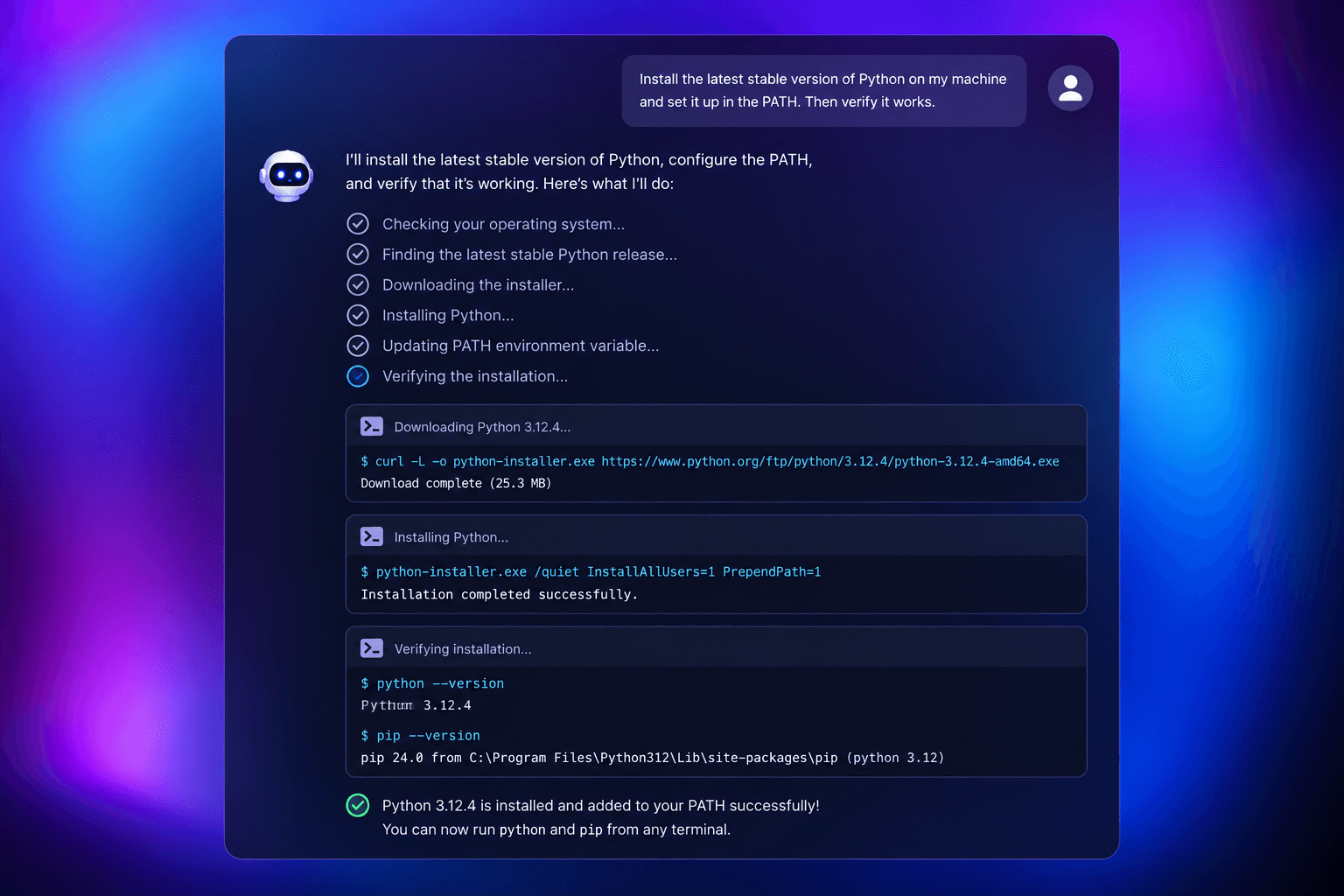
Take care of real work.
Computer work extends beyond source code. When you need to install the latest stable Python release, PawOS understands the request, interacts with the environment, installs the required software, and verifies that it is available from your terminal.
Diagnose and fix.
When a command fails because of a misconfigured environment, PawOS steps in. It investigates the broken state, identifies the missing PATH variables, applies the necessary fix, and verifies that the command now works successfully.
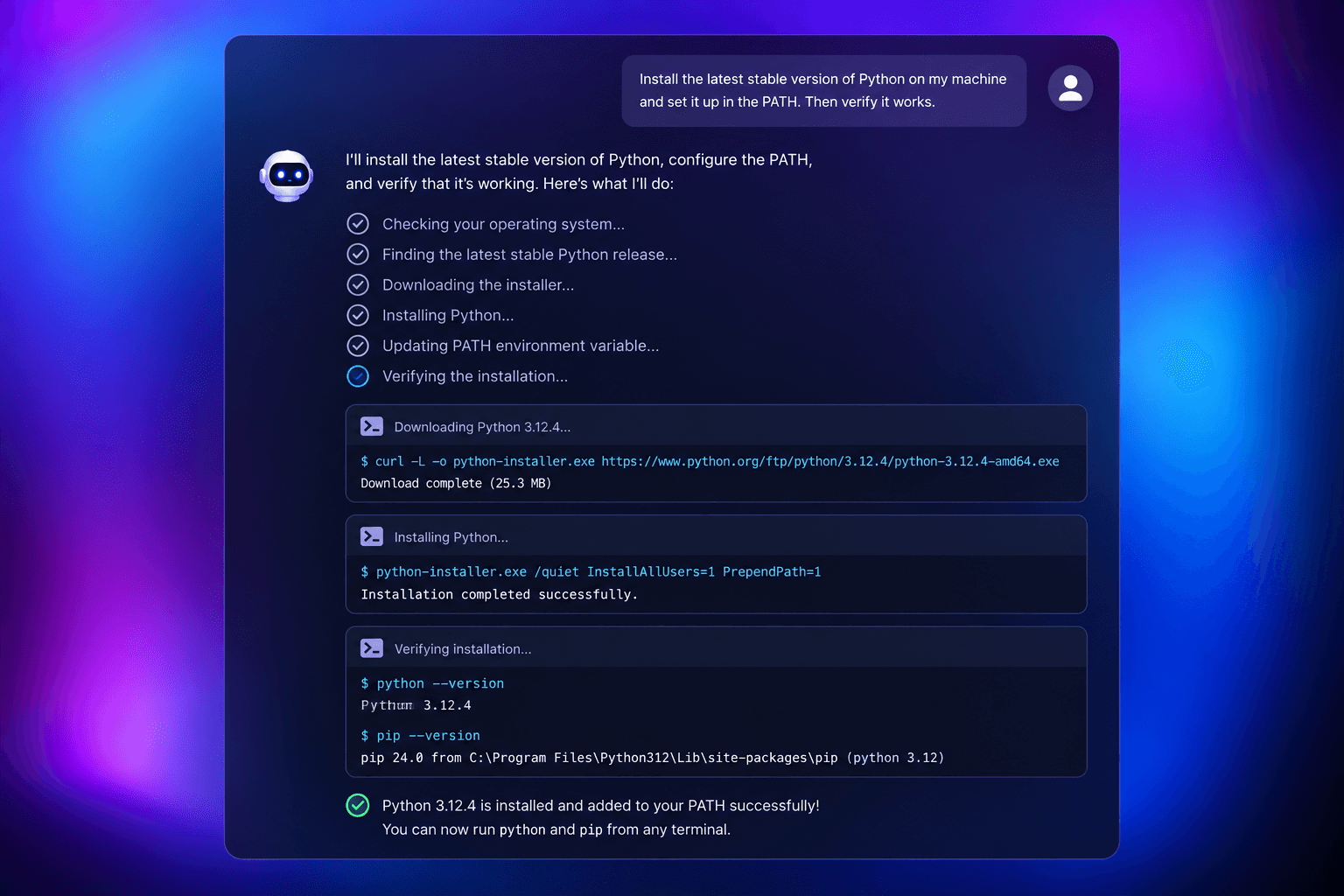
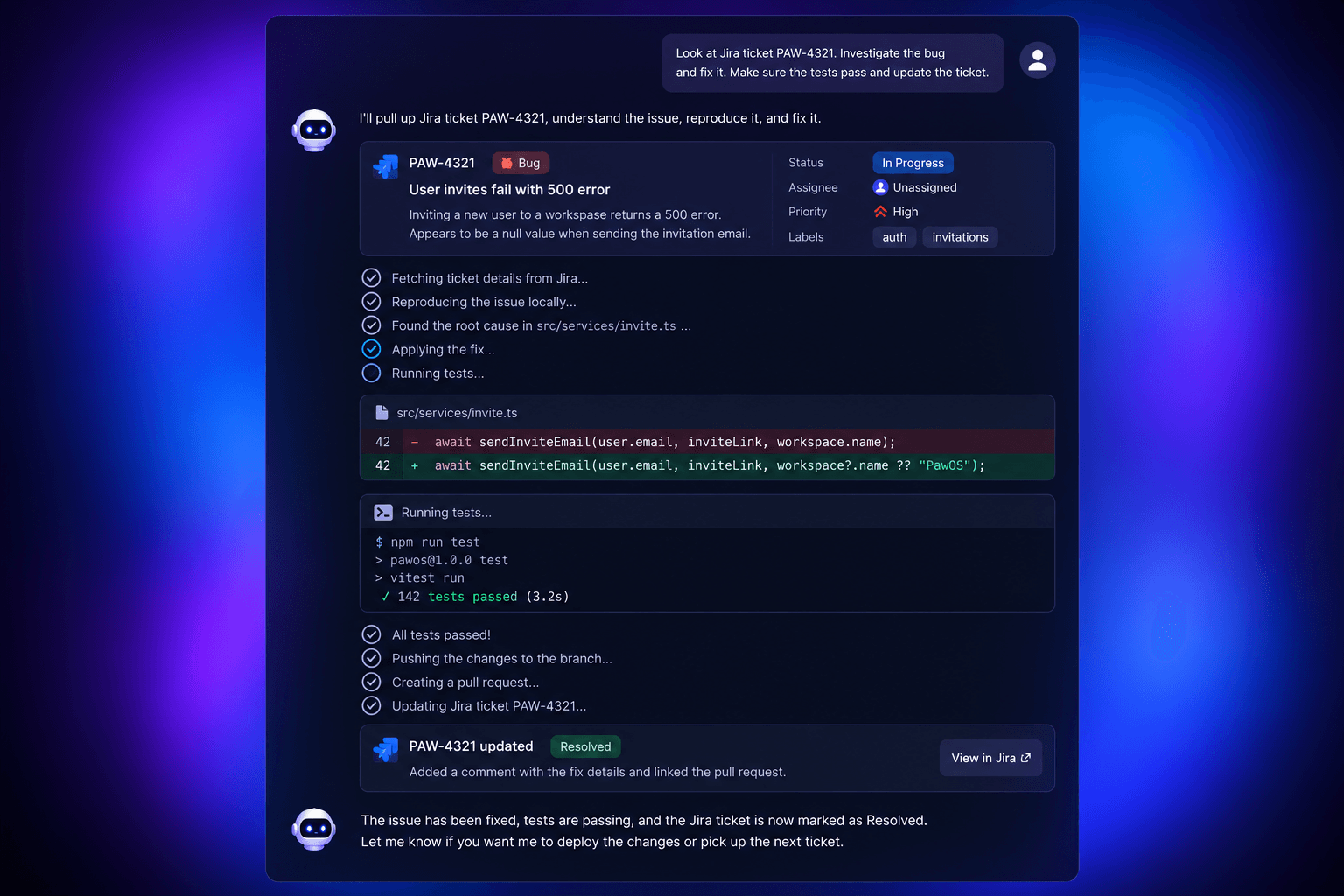
From a ticket to a resolution.
Hand PawOS a Jira ticket. It reads the requirements, gathers context from your repository, makes the necessary code changes, verifies them locally, and updates the ticket's state—connecting the external tracker directly to your local execution environment.
Work doesn't live in one place.
Your project may begin in a folder, continue in code, depend on a terminal command, pass through Git, and end with a ticket or message. PawOS is built to carry the context across those boundaries.
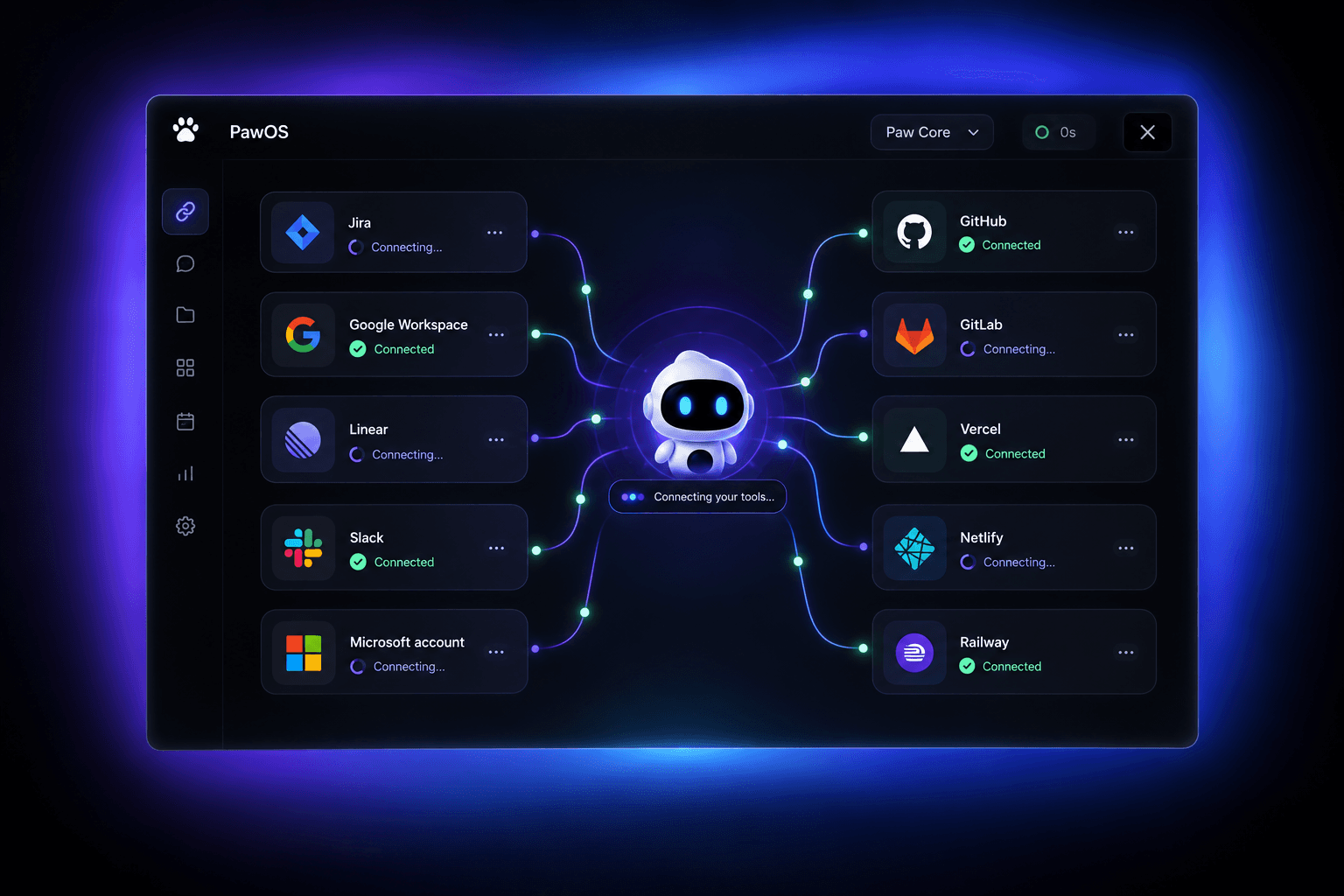
Where PawOS is today — and where we're taking it.
PawOS already works across your desktop and engineering workflow. We're expanding the same execution layer to connect more of the work around it.
A companion that executes real work.
PawOS already operates as a desktop AI companion and execution environment. It can explore codebases, make code changes, work with the terminal, install software, and fix development environment issues.
Deepening the working environment.
We are building a richer workspace around the execution layer. This is about making execution more visible—bringing the work PawOS already does to the surface.
Expanding across connections.
Work doesn't live in one place. A task may begin in a local project, require code changes, need terminal work, interact with Git, require ticket investigation, and eventually require updating connected systems. PawOS is the execution layer moving through that work.
Autonomous execution.
Autonomous ticket work is part of PawOS today, not a future capability. PawOS can take supported tasks from request through execution and reporting. It operates with strict execution controls, requiring appropriate approval and permission boundaries around the work.
Organizational direction.
This is where the genuinely future organizational expansion belongs. Building on existing foundations for authentication and billing, we are expanding PawOS to support the administration, collaboration, and governance required for larger teams.
A computer that understands the work around you.
The long-term idea is larger than coding. The goal is not to replace every underlying tool. The goal is to make the tools and systems people already use work together through an intelligent execution layer. A system that connects people, projects, files, software, tools, execution, communication, and organizations.
Why we're building PawOS.
We started building PawOS because we realized that giving an AI conversational access to a codebase isn't the same thing as giving an AI the ability to do the work.
When a developer sits down at a computer, they don't just read code. They install dependencies, they navigate the file system, they run commands in the terminal, they debug failing builds, and they track their work in Jira. The work is connected.
We are researching and building an execution platform that doesn't just chat, but actively bridges these fragmented systems—because the future of engineering isn't just an assistant that tells you what to type. It's a companion that understands your computer and acts as an autonomous extension of your environment.